140 notes tagged as ["Marketplaces"]
Filter your results by choosing one or more tags below or type your query in the search field above.
-

Navigate Europe’s top electronics marketplaces and boost your business success. With a diverse population, a robust economy, and a high demand for cutting-edge technology, the European consumer electronics market offers incredible growth opportunities for global brands. However, navigating this multifaceted market comes with its own unique set of challenges and complexities.
In this comprehensive guide, we help brands worldwide to sell effectively on European consumer electronics marketplaces. From regional consumer preferences to details on the top marketplaces in Europe, this guide provides the strategic insights and practical steps needed to ensure your success.
-
TikTok Shop could increase its share of overall retail sales from 1% today to 10% in 2028, The Wall Street Journal reported Wednesday (April 29), citing data from Marshal Cohen, chief retail adviser at market research firm Circana. “The consumer clearly has adopted TikTok as one of the few spaces of discovery and brand association,” Cohen said, according to the report.
The WSJ also cited data from eCommerce data provider Charm.io showing that TikTok Shop’s U.S. sales nearly doubled year over year to reach $4.9 billion in the first quarter, and data from data provider Consumer Edge showing that consumer spending on the platform was up 46% year over year in the first three months of 2026.
-
The RetailX UK500 2026 is our 12th annual report evaluating the performance of retailers, brands and marketplaces selling in the UK. Looking beyond simple turnover or traffic, the UK500 measures how retailers, brands and marketplaces deliver value across the entire retail ecosystem. It is a listing that takes into into account evolving consumer behaviour, economic headwinds and disruptive technologies such as AI.
-
You are currently enjoying the free trial mode which gives only back 3 results for each of your searches.
Click on Reset Search Tags to try another search.
Free NewsletterOnly paid members can get full access to the most recent content, create their own tags & personal folders, assign search results to specific projects and much more… all of this for less than 99c a day.
-
How Amazon wins discretionary spend and Walmart holds necessities
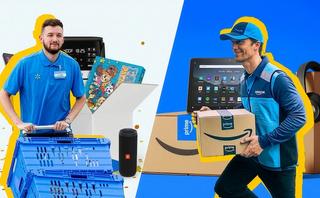
The battle for consumer spending continues. Over the past few years, shoppers have been tightening their belts, spending less on retail shopping and more on essentials like rent and healthcare. That shift spells sobering news for retail giants Amazon and Walmart. With the overall retail pie getting smaller, the scrum for each slice is heating up.
Nothing shows this battle more clearly than the holiday season. The last three months of 2025 accounted for about 27% of all retail sales for the year. Amazon, for its part, continued to gain share from October through December, achieving record-breaking results. But the boost isn’t coming from essentials. Instead, categories like clothing and electronics are fueling its gains.
-

Online purchase journey said to fragment
Online marketplace shoppers are still more likely to being their purchase journey at a marketplace than any other channel, but the extent to which that’s the case appears to have lessened from last year as the journey becomes more fragmented, according to a report from ChannelEngine.
According to the survey of 4,500 online marketplace shoppers across the US, UK, France, Germany, and the Netherlands, 37% share tend to go first to online marketplaces when looking to purchase a product online, while 23% turn to search engines first, 11% to brand websites, and 9% to social media.
-

Marketplace shopping behaviour report 2026
Based on insights from 4,500 marketplace shoppers across the US, UK, Germany, France, and the Netherlands, this report reveals how trust, value, and transparency are now shaping the marketplace shopping experience.
Shopping journeys are broader, not linear
Shoppers no longer move from one channel to one checkout. They discover on marketplaces, validate on social platforms, compare across borders, and increasingly use AI to reduce effort. This report connects those touchpoints into a single, end-to-end view of how decisions are actually made.
-

80% of Greek consumers shop outside of the EU
A growing share of EU online shopping is flowing to marketplaces based outside the European Union. Greece has emerged as an extreme example of this shift. Recent survey data shows that roughly 80 percent of Greek consumers have purchased from at least one non-EU e-commerce platform, with Temu and Shein standing out as the most frequently mentioned marketplaces.
This development is more than a short-term consumer trend. It reflects bigger structural changes in European e-commerce, affecting price expectations, competitive dynamics, logistics, and regulatory priorities across the EU.
-
What data shows about AI shopping traffic
ChatGPT e-commerce referrals is still small. Let’s get that out of the way. Google, ads, and marketplaces are still doing most of the heavy lifting. But something interesting is happening at the edges.
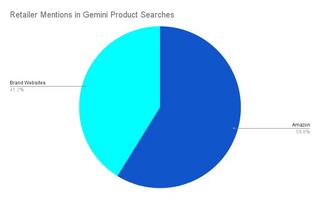
Early data and hands-on testing suggest that conversational AI may be concentrating shopping traffic around the same platforms that already dominate online retail.
According to recent reporting, referrals from ChatGPT to retail apps jumped 28% year over year during Black Friday. That doesn’t mean AI is taking over e-commerce. However, it does show people are starting to ask AI where to buy things. And once people start asking, defaults matter.
-

Amazon to lower fees for european sellers
European sellers will see lower fees on Amazon next year, which Reuters surmised was a response to competition from Temu and Shein, sites that sell “clothes, homeware and gadgets at rock-bottom prices.” Amazon’s selling-fee reductions are “focused first on lowering fees for sellers of cheap fashion,” the news outlet reported.
Amazon had previously announced 2026 fees for US sellers, which are rising by an average of $0.08 per unit sold, saying its fee changes were “significantly less than inflation and less than the 3.9%-5.9% annual cost increases from other major US carriers during the last two years.”
-

Top Amazon affiliate marketing platforms for 2026
Amazon introduced its Associates program in 1996. For years, it was the only Amazon affiliate marketing option out there. But it came with limitations: minimal control, few creator tools, and outdated tracking.
In the decades since, a wave of affiliate marketing tools has reshaped the landscape, and now those platforms are better than ever. They’re designed specifically for Amazon sellers, offering better creator discovery, real-time performance tracking, and scalable workflows to drive off-Amazon traffic. But the affiliate ecosystem has also become more polarized, forcing many publishers and creators to choose between promoting Amazon affiliate links, or going directly to direct-to-consumer (D2C) brands.
-

Ulta aims for new shoppers and more spend with new marketplace
Marketplaces have become the go-to way for retailers to quickly expand their assortment in a low-risk way. And Ulta wants in. The cosmetics retail chain recently launched UB Marketplace not to expand the assortment of its core offering, but to test products in adjacent categories, such as grooming, wellness, pro tools and global beauty, said James Lang, Vice President of Marketplace at Ulta.
“We like to think of this as the second floor to our digital store,” Lang said. “These brands, these categories that we’re launching are really things that you would expect to see, and if we had more floor space, you would naturally see these brands in our stores.”