172 notes tagged as ["delivery"]
Filter your results by choosing one or more tags below or type your query in the search field above.
-

Delivery has become a buying decision, not a back-end detail. 48% of European shoppers abandoned their cart due to delivery issues in the last 3 months, 77% experienced at least one problem with their most recent delivery, and 76% prefer stores that show a specific delivery date at checkout. In 2026, shoppers make up their mind at checkout. And when the experience falls short, they don’t stick around.
-
For this year’s report, we’ve gone further than ever to understand what that means in practice. By analysing hundreds of millions of deliveries across thousands of retailers using Shippit in Australia and New Zealand, surveying hundreds of retail decision makers, thousands of consumers, and the carriers responsible for moving parcels between them, we’ve built the most comprehensive picture yet of where delivery stands and where it’s heading.
-
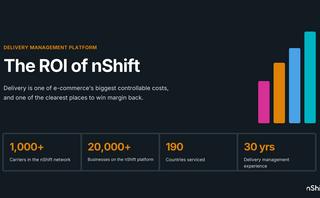
Delivery is one of the largest controllable variables in e-commerce profitability. Every failed handoff, abandoned cart or “where is my order?” call is margin leaving the business. This report maps the financial return of fixing it across four product areas, backed by verified customer results and third-party benchmarks.
-
You are currently enjoying the free trial mode which gives only back 3 results for each of your searches.
Click on Reset Search Tags to try another search.
Free NewsletterOnly paid members can get full access to the most recent content, create their own tags & personal folders, assign search results to specific projects and much more… all of this for less than 99c a day.
-
Who owns the last mile delivery experience?
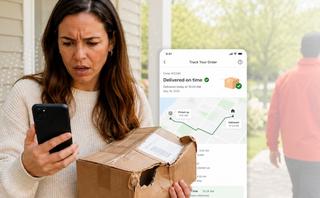
A customer orders from your brand, has a terrible delivery experience through DoorDash or Instacart, and leaves a one-star review that tags you, not the driver. It doesn’t matter that you never touched the package after it left the warehouse. It doesn’t matter that the delay was the platform’s fault.
To that customer, you failed them.
This is the central tension of last mile delivery. Retailers have embraced third-party platforms to meet rising consumer expectations for speed and convenience, and for good reason.
-

DDU Shipping vs DDP: What ecommerce brands need to know
The recent changes in the tariff landscape have made duty and tax payments a growing concern for both consumers and global ecommerce brands, particularly when choosing between DDP (Delivered Duty Paid) and DDU (Delivered Duty Unpaid) shipping.
International commerce is no longer a simple matter of moving goods across borders, it is a complex intersection of pricing, checkout transparency, and regulatory compliance. As the global trade landscape shifts, with major markets like the US and EU exempting de minimis thresholds, the choice between Delivered Duty Paid (DDP) and Delivered Duty Unpaid (DDU) has become a primary driver of international conversion and brand trust.
-
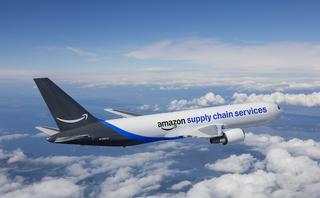
Amazon is opening its logistics network to all businesses
Any business can now move, store, and deliver everything from raw materials to finished products quickly and reliably, using the same supply chain that supports Amazon.com. Retail, wholesale, and commercial businesses of all sizes now have access to the same logistics capabilities that have supported Amazon’s growth for decades.
These services were originally developed to power Amazon’s own retail operations and to support independent selling partners worldwide. Over the past three years, hundreds of thousands of Amazon sellers have trusted the company’s logistics network to move, store, and deliver hundreds of millions of packages across third-party facilities, warehouses, and sales channels beyond the Amazon store. The launch of ASCS builds on this momentum, now supporting third-party logistics for businesses in industries such as healthcare, automotive, manufacturing, and retail.
-

The Last Mile has changed. Has your operation?
This survey report reveals that while organizations understand the importance of last mile delivery, operational transformation still hasn’t followed. The last mile has changed, but many organizations are still treating last-mile delivery as a cost center, tracking metrics like cost per delivery, carrier rates, and route efficiency without considering the customer experience.
It’s an approach that doesn’t reflect reality. For many customers, delivery is now the only part of the supply chain they actually experience—and it directly shapes whether they return.
-

The e-seller's guide to cross-border growth 2026
This report synthesizes consumer behavior and other market insights across a dozen major destination markets in Europe, North America and Australia, some of Landmark Global’s key destination countries, to help e-tailers understand where expectations converge, where operational choices matter most, and how e-logistics performance increasingly determines success in cross-border expansion.
What you’ll find inside:
-

AI is changing how consumers discover
Increasingly, shoppers aren’t beginning their journey on a retailer’s website. Instead, they’re asking ChatGPT what to buy. They’re scrolling TikTok Shop. They’re clicking marketplace recommendations. According to Gartner, by the end of 2026, traditional search engine volume is expected to decline by 25 percent as consumers shift toward artificial intelligence chatbots and other virtual agents for discovery. That means the front door of commerce is no longer controlled by the retailer.
-

DHL global connectedness report 2026
At first glance, the world seems to be pulling apart. But the data tells a different story. The world is not disconnecting – its connections are evolving. Explore the latest findings in the 2026 DHL Global Connectedness Report. The world finds itself in a period of profound geopolitical and economic uncertainty. For leaders in both the public and private sectors, volatility has become a part of daily decision-making. In such an environment, assumptions can be misleading – and facts matter more than ever.
-
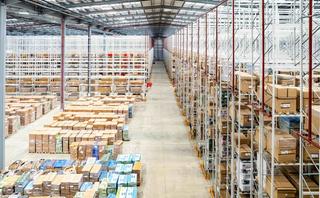
Fashion fulfilment solutions: What fashion brands need from fulfilment
If your fashion brand is scaling fast, fulfilment is often the first place where cracks begin to show. What once worked with a single warehouse, a handful of markets and manageable order volumes quickly becomes a bottleneck as international demand, delivery expectations and returns volumes increase.
One thing’s for sure: fulfilment is no longer just a back-office function for ambitious brands in the fashion space. It’s a defining part of how businesses scale, compete and protect margins.